Unlocking the Mystery of Deductibles: A Guide to Saving on Huntsville Auto Insurance
Originally published: April 2024 | Updated: November 2025
Auto insurance deductibles throw off a lot of Huntsville drivers. People often pick deductibles without really knowing how those numbers affect monthly premiums or what they’d pay out-of-pocket if they ever need to file a claim.
This confusion leads some individuals to overpay for insurance, while others are hit with unexpected bills after an accident. Nobody likes that.
The secret to saving money on Huntsville auto insurance is picking a deductible that keeps your monthly payments reasonable but won’t wreck your finances if you have to file a claim.
Raising your deductible from $500 to $1,000 can lower premiums by about 10%. But that only makes sense if you’re sure you could cover the higher cost if you ever need to use your insurance.
Huntsville’s got its quirks—severe weather, crowded traffic, and all sorts of local risks. Smart drivers weigh their finances, local hazards, and their own driving habits before picking a deductible.
The right choice can save you a chunk of change every year, but still keep you covered on Alabama roads.
Key Takeaways
Deductibles are what you pay out-of-pocket before insurance helps with a claim.
Higher deductibles lower your monthly payments, but you’ll pay more if you have an accident.
Pick a deductible you could pay right away, and think about Huntsville’s weather and traffic risks.
What A Deductible Really Is
A deductible is what you pay out of pocket before insurance pays the rest on covered claims.
Raising it usually lowers your premium; lowering it raises your premium. Deductibles typically apply to comprehensive and collision, not liability.
Select a level that aligns with your cash cushion and claim risk tolerance.
The Basic Formula
When you have an accident, you pay your deductible first. The insurance company handles the rest, up to your policy limits.
Common Deductible Amounts
Deductible Amount
Driver Pays
Insurance Pays
$250
First $250
Rest of the claim
$500
First $500
Rest of the claim
$1,000
First $1,000
Rest of the claim
How It Works in Practice
If you’ve got a $500 deductible and crash your car, causing $3,000 in damage, you pay $500. The insurance company covers the remaining $2,500.
Key Points to Remember
Deductibles apply per claim, not per year
Higher deductibles mean lower monthly premiums
Lower deductibles mean higher monthly premiums
Types of Coverage with Deductibles
Deductibles usually show up in:
Collision coverage – pays for damages from accidents
Liability coverage doesn’t have a deductible. The insurance company just pays covered claims—no upfront cost for you.
Start smarter with Woodall & Hoggle by comparing Huntsville auto insurance quotes side-by-side. Balance premiums, deductibles, and protection confidently—Contact Us to explore your best options.
If you’re ready to get
started, call us now!
Premium Vs Deductible: The Real Trade-Off
Higher deductibles reduce monthly costs but raise your claim-time bill. If the annual premium savings don’t meaningfully offset that extra out-of-pocket within 12–24 months, the trade-off isn’t worth it.
Higher deductibles mean you’ll pay more out-of-pocket after an accident, but your monthly bill gets smaller.
Lower deductibles mean less money to pay after a claim, but you’ll pay more every month.
Deductible Amount
Monthly Premium
Out-of-Pocket Risk
$500
Higher
Lower
$1,000
Medium
Medium
$2,000+
Lower
Higher
Lower deductibles raise your premiums but save you money if you file a claim. It’s a balancing act between what you can pay now and what you’d pay later.
If you rarely file claims, a higher deductible can save you cash every month. You’re basically betting you won’t need to use your insurance.
For individuals who anticipate needing their insurance more frequently, a lower deductible may be worth the higher monthly cost. Nobody likes surprise bills.
Young drivers or folks with a rough driving history usually pay higher premiums anyway. Choosing a higher deductible can help reduce those costs.
Experienced drivers with clean records? They’ve got more wiggle room. They can choose a deductible based on the level of risk they’re comfortable with.
Picking Your Deductible (Local Reality Check)
Huntsville drivers face their own set of challenges when selecting a deductible. Weather and traffic both play a part in how often you need to file a claim.
Common Deductible Options:
$250 – Higher premiums, but less to pay if something happens
$500 – This is the middle ground for most people
$1,000 – Lower premiums, but you’d better have savings just in case
Alabama’s wild weather—especially hail in spring—can cause expensive damage. If you choose a high deductible, ensure you can actually afford to pay it during storm season.
Local Financial Considerations:
Monthly Savings
Annual Impact
Best For
$15-25
$180-300
Budget-conscious drivers
$25-40
$300-480
Moderate savers
$40-60
$480-720
High-deductible comfort
Rush hour in the Research Triangle area increases your odds of an accident. If you commute to Redstone Arsenal or Research Park, you’ve got a different risk profile than someone who sticks to suburban roads.
Knowing what a deductible is and how it works helps you make better choices for your situation. It’s just the amount you pay before insurance jumps in.
Emergency Fund Rule: Most experts say you should keep at least three times your deductible in savings. That way, you’re covered if you have a streak of bad luck.
Huntsville’s auto repair shops offer lower prices than those in bigger cities, which is a nice benefit. That can make higher deductibles less intimidating if you have a good driving record.
Check your driving history and local conditions carefully before making a decision. A clean record gives you more flexibility to pick a higher deductible.
Must-Have Coverage You Shouldn’t Skip
When you’re picking auto insurance in Huntsville, some coverage isn’t optional. Other types help you avoid financial disaster, even if they aren’t required by law.
Liability coverage is a must-have in Alabama. It covers injuries and property damage you cause to others. Skip it and you’ll face fines—or worse, a lawsuit.
Collision coverage pays for your own car’s repairs after an accident, no matter who caused it. Lenders usually demand this if you’re still paying off your car.
Comprehensive coverage handles the weird stuff—think theft, vandalism, hail, or hitting a deer. Again, lenders tend to require this if your car’s financed.
Coverage Type
What It Covers
Why It Matters
Liability
Damage to others
Required by law
Collision
Your car is in a crashes
Protects a major investment
Comprehensive
Theft, weather, vandalism
Covers unexpected events
Uninsured Motorist
Injuries from uninsured drivers
Common problem in Alabama
Uninsured motorist coverage is a lifesaver when the other driver is uninsured. With about 13% of Alabama drivers uninsured, it’s more important than you might think.
Medical payments coverage helps with medical bills after a crash, no matter who’s at fault. It can even cover your passengers.
It’s smart to choose coverage limits that actually protect your assets—not just the bare minimum. Higher limits cost extra, but they can save you from financial ruin if the worst happens.
Huntsville Risks: Weather, Traffic, Parking
North Alabama’s storms, hail, and busy commuter corridors increase the likelihood of loss. Garage/driveway parking, typical mileage, and route choices all affect risk.
Use local realities—not just price—to guide coverage levels and deductible selection for fewer surprises at claim time.
Severe Weather Patterns
Alabama’s weather brings plenty of headaches for car owners. Huntsville gets frequent thunderstorms with big hail that can dent cars or crack windshields.
Tornadoes typically appear in the spring and can cause significant damage. High winds might flip vehicles or send debris flying into parked cars.
Winter ice storms don’t occur often, but when they do, they can be extremely dangerous. Slick roads mean accident rates go up fast.
Traffic Challenges
Risk Factor
Impact Level
Peak Times
Rush hour congestion
High
7-9 AM, 4-6 PM
Construction zones
Medium
Varies
Interstate accidents
High
All hours
Research Park traffic jams up every day. Stop-and-go conditions increase the likelihood of rear-end crashes for commuters.
Interstate 565 carries lots of trucks. These large vehicles have blind spots and require more space to stop, making accidents in these areas particularly serious.
Parking Concerns
Downtown Huntsville lacks sufficient parking. Tight spaces mean more door dings and little bumps.
Shopping centers get crazy during holidays. Drivers stressed out by crowds sometimes cause fender-benders in parking lots.
Street parking near universities? That’s risky too. Student drivers learning the ropes bump up claim rates around campus during the school year.
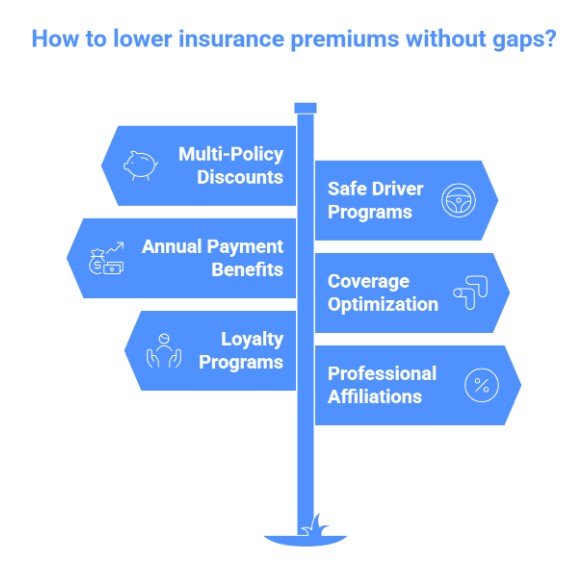
Maintain a clean payment history, re-shop annually, and trim only non-essential add-ons—not core protections like comprehensive/collision coverage or adequate liability limits.
Multi-Policy Discounts
Bundling auto with home or renters insurance usually saves 5-25%. Most insurers offer multi-policy discounts if you combine coverage.
Safe Driver Programs
Telematics devices and apps track driving habits and reward safe drivers. These programs can drop your premium by 10-30% if you drive safely.
Discount Type
Potential Savings
Good Student
10-15%
Multi-Vehicle
10-25%
Anti-theft Device
5-10%
Defensive Driving Course
5-15%
Annual Payment Benefits
If you pay your premium annually instead of monthly, you skip processing fees. That move can save you $50-100 a year.
Coverage Optimization
Cutting coverage you don’t need—like rental car reimbursement or roadside assistance—shrinks your bill. It’s worth taking a hard look at what extras you’re actually using.
Loyalty Programs
If you stick with the same insurer for a few years, you may be eligible for additional loyalty discounts. These rewards typically become more valuable the longer you remain covered.
Professional Affiliations
Some insurers give group discounts through your job, alumni group, or professional organizations. These can be worth 5-15% and require minimal effort to obtain.
Uncertain which deductible truly aligns with your budget and risk? Woodall & Hoggle can review your policy, stack discounts, and optimize coverage—Schedule a quick consultation.
If you’re ready to get
started, call us now!
Compare Quotes The Right Way
Smart shoppers know that comparing auto insurance quotes isn’t just about the cheapest price. The lowest premium may actually cost you more in the long run.
Start with coverage limits first.
If two quotes have different liability limits, they cannot be compared fairly. Always verify that each quote provides the same level of protection.
Check deductible amounts carefully.
A $200 deductible quote will always cost more than a $1,000 deductible from the same company. Knowing how deductibles work helps you make smarter choices.
What to Compare
Why It Matters
Coverage limits
Same protection levels
Deductible amounts
Affects out-of-pocket costs
Policy features
Additional benefits vary
Look beyond the bottom line.
When comparing quotes from different providers, don’t forget to consider customer service and claims handling. That stuff matters when you actually need help.
Get quotes from at least three companies.
Drivers save an average of $762 per year by shopping around. That’s not pocket change.
Review policy details twice.
Hidden fees or coverage gaps can turn a cheap quote into a pricey mistake. Read every line before you decide.
Always compare similar coverage options to get the best deal for your Huntsville auto insurance.
The “Can I Afford It Tomorrow?” Rule
Only choose a deductible you could pay tomorrow without borrowing. If that number is uncomfortable, consider lowering the deductible and pursuing savings through discounts, bundling, telematics, and quote shopping, rather than stripping core coverage.
The 24-Hour Test
This rule makes you think about real life. Accidents can happen unexpectedly, and the deductible becomes due as soon as your claim is approved.
Three Quick Checks
Ask yourself:
Can I pay the deductible without borrowing
Will it wipe out my emergency fund?
Would I have to skip paying other important bills?
Emergency Fund Connection
Financial experts recommend keeping your deductible amount in a separate savings account, distinct from your regular expenses. It’s a safety net for surprise car repairs.
Monthly Budget Reality
Some folks pick high deductibles to lower their monthly premiums. However, if you don’t have that cash on hand, it can come back to bite you.
A $1,000 deductible saves you each month, but it’s a problem if you can’t cover it when you need to.
The Sweet Spot
Most Huntsville drivers feel comfortable with deductibles ranging from $250 to $750. That range strikes a balance between savings and what you can afford out of pocket.
Testing Different Amounts
Deductible
Monthly Savings
Can you Pay Tomorrow?
$250
Low
Usually Yes
$500
Medium
Maybe
$1,000
High
Often No
There’s no one-size-fits-all answer here. It really depends on your finances.
Savings Checklist for the Huntsville Drivers
Smart drivers can knock down their auto insurance costs with a solid checklist. Each step is a shot at lower premiums without losing good coverage.
Review Your Deductible Options
Compare $250, $500, and $1,000 deductible amounts
Calculate potential premium savings for each level
Increasing deductibles from $500 to $1,000 may lower rates by 10%
Evaluate Coverage Needs
Remove unnecessary add-ons from older vehicles
Consider dropping comprehensive coverage on cars worth less than $3,000
Verify liability limits meet state requirements
Maximize Available Discounts
Bundle auto and home insurance policies
Install anti-theft devices or safety features
Complete defensive driving courses
Maintain good credit scores
Shop and Compare Regularly
Get quotes from at least three different insurers annually
Review policy terms during renewal periods
Ask about loyalty discounts with current providers
Financial Planning Considerations
Drivers should pay their chosen deductible if an accident happens. Understanding deductibles helps drivers make informed decisions about coverage that balance cost savings with financial protection.
The real trick is to customize your coverage to fit your needs and budget, rather than simply accepting whatever the standard policy offers.
Deductible Trade-Offs (Comparison Table)
Picking the right deductible isn’t always straightforward. You need to understand how each option truly impacts your wallet.
The trade-off between deductible and premium choices hits both your monthly costs and claim expenses in different ways.
Deductible Amount
Monthly Premium
Annual Savings
Out-of-Pocket Cost
$250
Higher
$0 (baseline)
Lower risk
$500
Medium
$200-400
Moderate risk
$1,000
Lower
$400-600
Higher risk
$2,500
Lowest
$600-800
Highest risk
Lower deductibles push your insurance costs up, but you’ll pay less if you ever file a claim. This route suits individuals who frequently file claims or simply want predictable bills each month.
On the flip side, higher deductibles can really drop your monthly premiums. But you’ll need to cough up more cash if something actually happens. It’s a mix of math and your comfort with risk.
Most people settle on a deductible somewhere between $500 and $1,000. That range usually brings in decent premium savings without making you panic if you have to file a claim.
Comparing deductibles across insurance companies shows some surprising differences. Some insurers offer larger discounts for higher deductibles than their competitors.
You need to have enough emergency cash to cover the deductible you choose. Don’t choose a deductible you can’t pay out of pocket—nobody needs that stress.
Woodall & Hoggle helps Huntsville drivers save on auto insurance with the right deductible and discounts. Get expert guidance for real savings—Contact Us today.
Contact Us Today For An Appointment
Frequently Asked Questions
What is an auto insurance deductible in Huntsville?
A deductible is the out-of-pocket amount you pay before insurance covers the rest of a claim. Higher deductibles lower monthly premiums, while lower deductibles raise premiums but reduce claim costs over time.
How does raising my deductible affect my Huntsville auto insurance premium?
Increasing your deductible usually reduces your premium. Insurers reward higher deductibles because you assume more risk. However, ensure you can comfortably afford to pay that amount if an accident were to happen.
What deductible amount is best for Huntsville drivers?
The best deductible is one you can pay immediately without debt. Many Huntsville drivers opt for $500–$1,000, striking a balance between affordable premiums and realistic claim costs.
Can storms or weather in Huntsville affect my deductible choice?
Yes. Huntsville’s storms and hail increase the chance of comprehensive claims. If you park outside, a lower deductible may help you avoid steep out-of-pocket costs after weather damage.
Should I always pick the lowest premium when shopping for auto insurance?
No. The cheapest policy may lack coverage or have deductibles too high for your budget. Compare value—coverage limits, deductibles, and claims support—alongside price.
What discounts help Huntsville drivers lower auto insurance costs?
Safe-driver programs, multi-policy bundling, good student discounts, paperless billing, and telematics devices are common ways Huntsville drivers save without cutting coverage.
How often should I review my deductible and auto policy?
Review your auto policy annually or after significant life changes, such as purchasing a new car, changing jobs, or relocating. An annual check ensures that your deductible and coverage still align with your budget and risks.
Can I change my deductible after buying my policy?
Yes, most insurers allow deductible changes mid-term or at renewal. Contact your provider to adjust, but be aware that it may change your premium immediately.